Iron & Hair: What’s for Lunch?
Iron gets talked about a lot when it comes to hair loss — but what does it actually have to do with our hair?
Quite simply, iron helps our body make haemoglobin, the protein in our red blood cells that carries oxygen around the body.
And our hair follicles are busy places. During the growing phase of the hair cycle, cells within the follicle are rapidly dividing to produce new hair. Like the rest of our body, they need a healthy supply of oxygen, energy and nutrients to do their job.
If we become iron deficient, that normal process can be affected and increased hair shedding can sometimes be one of the symptoms.
So yes, iron matters to our hair follicles.
But before anyone rushes to the supplement aisle…
How much do we need?
UK recommendations are:
Men aged 19+: 8.7mg per day
Women aged 19–50: 14.8mg per day
Adults over 50: 8.7mg per day
Women under 50 generally need more because iron is lost through menstruation.
And one important point: hair shedding doesn’t automatically mean you’re iron deficient.
If you think you might be deficient, speak to your GP. A simple blood test can help establish whether there’s actually a problem and, importantly, why.
For the rest of us, I’m much more interested in something we can do every day:
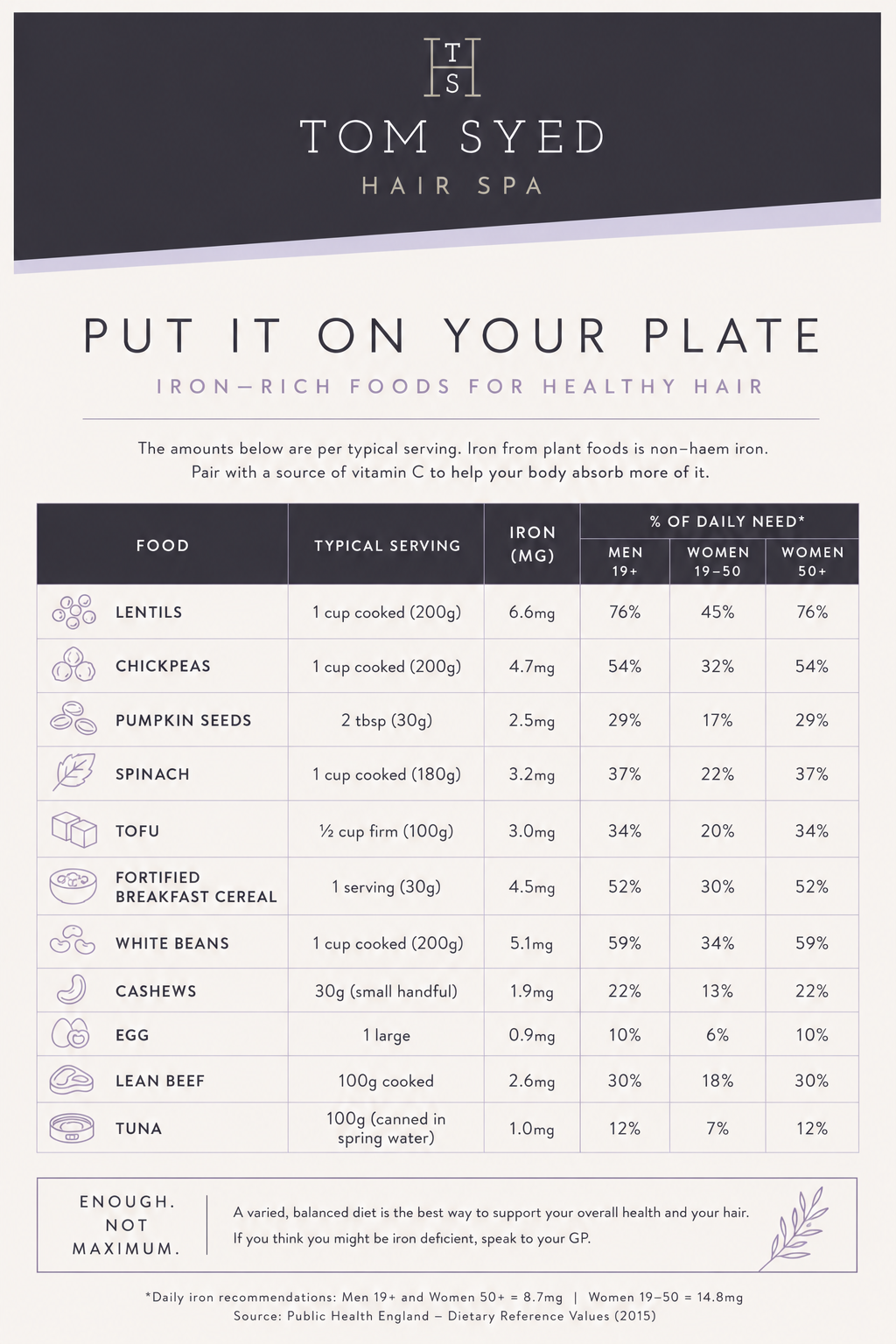
Put some iron on our plates.
Not all iron is the same
This is where it gets interesting.
We get dietary iron in two main forms.
Haem iron comes from animal tissues and is generally more easily absorbed by the body.
Non-haem iron is found in plant foods such as lentils, beans, chickpeas, tofu, nuts, seeds and leafy greens, as well as fortified foods.
Our bodies don’t absorb non-haem iron quite as easily.
But we can give it a helping hand.
Just add vitamin C
Eating a source of vitamin C alongside plant-based iron can help us absorb more of it.
And this is one of those pieces of nutrition science that’s actually incredibly easy to use.
Lentils + peppers
Iron + vitamin C.
Chickpeas + tomatoes and lemon
Iron + vitamin C.
Fortified cereal + berries
Iron + vitamin C.
Spinach + peppers and lemon dressing
Iron + vitamin C.
No supplements. No complicated meal plans.
Just ingredients that happen to work rather nicely together.
Put it on your plate
So how do we actually get more iron into our everyday diets?
Thankfully, it doesn’t require eating liver for breakfast.
Try adding a spoonful of pumpkin seeds to yoghurt or porridge.
Throw chickpeas or lentils into a salad and add tomatoes, peppers or a squeeze of lemon.
Add beans to soups, stews and pasta sauces.
Use tofu in a quick stir-fry with peppers and broccoli.
Have fortified breakfast cereal with berries or kiwi.
Add a handful of spinach to an omelette, pasta or curry.
Snack on a small handful of nuts and seeds.
These aren’t enormous dietary changes. They’re little additions that, over the course of a week, can make our diets more varied and help provide the iron our bodies need.
And that’s much more achievable than suddenly deciding you’re going to live exclusively on spinach.
Popeye had a lot to answer for.
A quick word about your cuppa…
There is one slightly annoying catch.
Tea and coffee contain compounds that can reduce the absorption of non-haem iron when they’re consumed around an iron-rich meal.
I’m absolutely not suggesting we all give up coffee.
There are limits to what I’m prepared to ask of you.
But if you’re particularly trying to maximise the iron you absorb from plant foods, having your tea or coffee between meals rather than alongside them can be useful.
So what is all this doing for our hair?
This is the bit I want you to remember.
We aren’t eating lentils because lentils magically grow hair.
We’re eating a varied diet containing enough iron because iron supports normal oxygen transport around the body, while our actively growing hair follicles depend on a reliable supply of oxygen, energy and nutrients.
That’s the distinction I want to make throughout this whole series.
There isn’t a single hair-growth food.
We’re simply trying to give our body — and therefore our follicles — the nutritional environment they need to do their job properly.
The takeaway
Iron is important for our overall health and it has a place in the healthy-hair conversation too.
But for everyday nutrition, we don’t need to obsess over it.
Regularly include foods such as lentils, beans, chickpeas, tofu, nuts, seeds, leafy greens and fortified cereals, and pair plant sources with something rich in vitamin C where you can.
A squeeze of lemon here. Some peppers there. Berries on your breakfast.
Small things, regularly.
And if you’re actually worried you’re deficient?
That’s when we stop talking about lunch and talk to our GP instead.
⸻
A little note before you go…
I’m a hairdresser and colour specialist, not a doctor or dietitian. This series is about understanding nutrition and healthy hair, not diagnosing or treating hair loss. If you’re experiencing sudden, significant or unexplained hair loss, speak to a qualified trichologist or your GP.
Middle Eastern Lentil Casserole
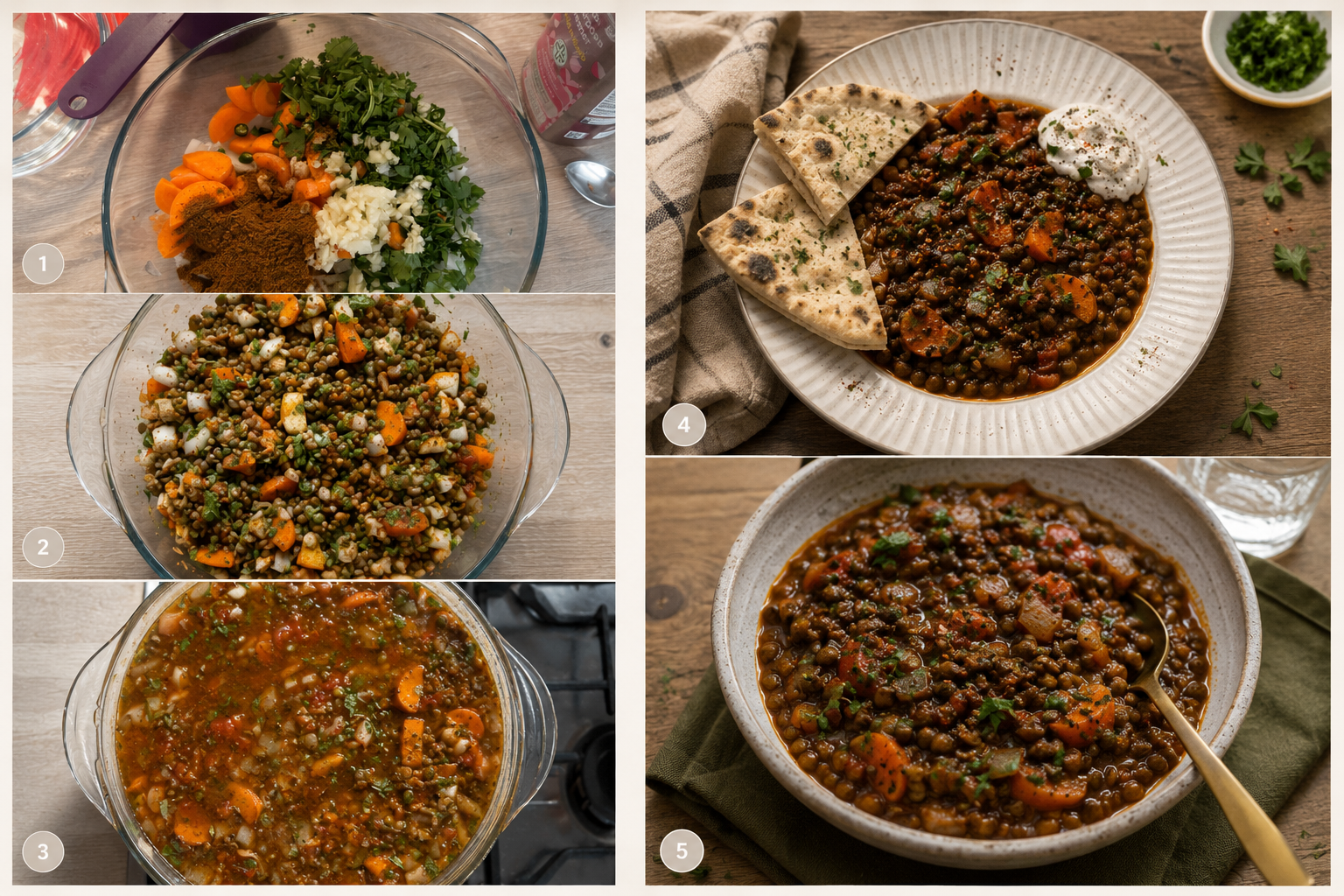
Rich, gently spiced and ridiculously easy to make, this is one of those recipes where the oven does almost all the work. Lentilles vertes make a brilliant base, with tomato, pomegranate molasses, chilli and plenty of herbs.
Serve it with warm flatbread and a spoonful of sumac yoghurt.
Serves 4–5
Ingredients
1 cup lentilles vertes
1½ onions, chopped
4 garlic cloves, crushed
1 generous handful fresh coriander, roughly chopped
1 carrot, diced
2 tsp ras el hanout spice mix
1 tin chopped tomatoes plus refill the tin with water to add in
2 tbsp tomato purée
½ cup olive oil
6 tbsp pomegranate molasses
2 tsp salt
Freshly milled black pepper
2 chillies, finely chopped
To Serve
Flatbreads
Greek yoghurt
Sumac
Method
Preheat the oven to 130°C fan.
Add the lentilles vertes to a saucepan of water and boil for 15 minutes, then drain and rinse well.
Add the onions, garlic, coriander, carrot, ras el hanout spice mix, chopped tomatoes, tomato purée, olive oil, pomegranate molasses, salt, freshly milled black pepper and chillies to a large casserole dish.
Refill the empty tomato tin with water and add this to the casserole.
Add the drained lentils and give everything a really good stir.
Cover and cook in the oven for 3 hours, or in a slow cooker on high hear, stirring every hour. If it begins to look a little dry during cooking, simply add another splash of water.
For the sumac yoghurt, stir a generous pinch of sumac through Greek yoghurt.
Serve the casserole warm with flatbread and a good spoonful of sumac yoghurt.
The lentilles vertes are our star here, providing plant-based, non-haem iron as well as protein and fibre.
The tomatoes also provide vitamin C, which can help our bodies absorb non-haem iron more effectively.
So we’re putting one of the simplest lessons from this article straight onto our plate:
Plant-based iron + vitamin C.
And perhaps the best part is that it doesn’t feel remotely like you’re eating something because it’s “good for you”.
It’s just a really lovely dinner.
Make ahead
This easily serves 4–5 people and freezes really well, so it’s a great one to make a big batch of. Allow any leftovers to cool, portion them up and freeze for an easy dinner another day.
Around 3–4mg of iron and 11–14g of protein per serving, before adding the flatbread and yoghurt.