Protein & Hair: Are You Eating Enough?
If we’re going to start anywhere with hair nutrition, I think protein is probably the obvious choice.
Protein is everywhere at the moment.
Protein yoghurts. Protein shakes. Protein bars. Protein cereal. I’ve even seen protein water — which, quite frankly, sounds joyless.
Walk around a supermarket and you’d be forgiven for thinking we’re all desperately deficient in the stuff.
But do we actually need all this protein? And more importantly for us, what does it have to do with our hair?
Quite a lot, actually.
Your hair is made from protein
The hair we see is predominantly made from a tough protein called keratin.
But there’s an important distinction to make here.
The hair that’s already grown out of your scalp isn’t alive. It’s made from keratinised cells — which is rather reassuring when I’m coming towards you with a pair of scissors.
The really interesting stuff is happening underneath the skin, inside the hair follicle.
During the active growing phase of the hair cycle — anagen — cells within the follicle are rapidly dividing and producing the material that will eventually become your hair.
And to do that, the body needs raw materials.
When we eat protein, our digestive system breaks it down into smaller building blocks called amino acids. Our body then uses those amino acids to make the many different proteins it needs — including keratin.
So I don’t particularly like saying that protein “feeds your hair”.
We’re actually feeding the follicle that’s making your next bit of hair.
I think that’s much more interesting.
So, how much protein do we actually need?
Here’s where supermarket marketing and nutritional science start to part company slightly.
For a generally healthy UK adult, the Reference Nutrient Intake for protein is around:
0.75g of protein per kilogram of body weight, per day.
So someone weighing 60kg would need around 45g per day.
At 70kg, it’s approximately 52.5g.
At 80kg, around 60g.
There are of course exceptions. Our requirements can change depending on things such as age, pregnancy and how physically active we are.
But here’s something that might surprise you:
Most adults in the UK are already eating more protein than the recommended amount.
So before we all panic-buy protein powder, there’s a good chance many of us are doing absolutely fine.
But what does 50g of protein actually look like?
This is the bit I’m interested in.
Because telling someone they need 50g of protein means very little unless they know what that looks like on a plate.
And as I said in the first article:
I don’t really want to tell you that you need more zinc. I want to tell you what you can have for lunch.
The same goes for protein.
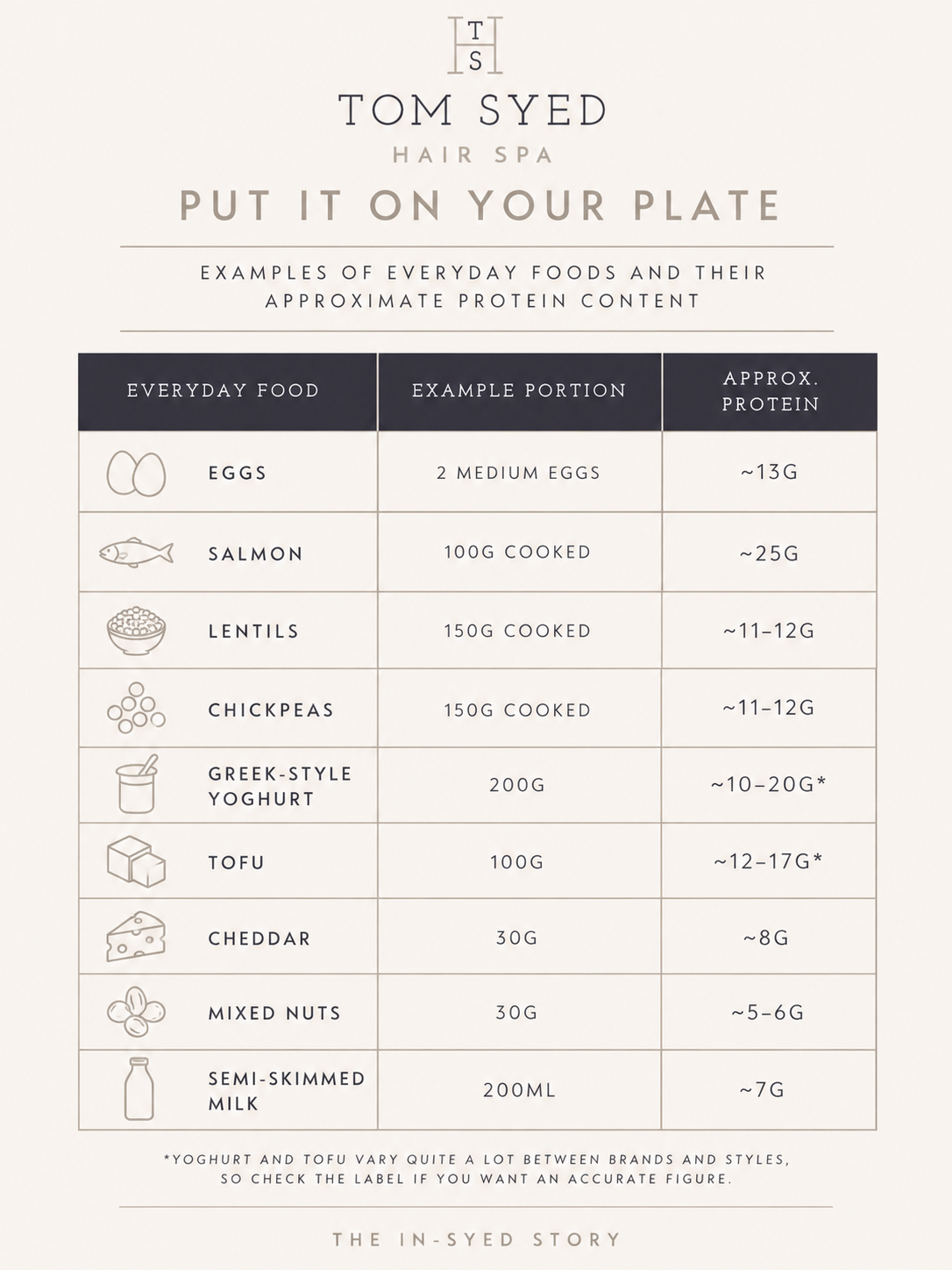
*Yoghurt and tofu vary quite a lot between brands and styles, so check the label if you want an accurate figure.
Suddenly, 50-odd grams doesn’t sound quite so intimidating.
Two eggs at breakfast, some lentils or chickpeas at lunch and a piece of salmon at dinner can get you there without a protein shaker ever entering the building.
And remember, smaller amounts from bread, grains, vegetables, nuts and other foods all contribute throughout the day too.
Is all protein created equal?
Not quite — and this is where amino acids come back into the conversation.
Protein is made from different amino acids. Our bodies can make some of them ourselves, but there are nine essential amino acids that adults need to get from food.
Animal-derived proteins such as eggs, dairy and fish generally contain all nine essential amino acids in useful proportions.
But that doesn’t mean vegetarians and vegans need to start looking worried.
Beans, lentils, chickpeas, tofu, tempeh, nuts, seeds and wholegrains are all useful protein sources too.
Different plant foods have different amino-acid profiles, which is why variety is helpful.
And despite what you may have heard, you don’t need to sit at the dinner table calculating amino acids and carefully combining proteins at every single meal.
Eat a varied diet across the day and the body is remarkably good at sorting things out.
Beans on toast, incidentally, isn’t looking quite so unsophisticated now.
Can not eating enough protein cause hair loss?
This is where protein becomes particularly important to our conversation.
Severe protein deficiency isn’t common among people eating a varied diet in the UK.
Where things can become more complicated is when someone’s overall food intake becomes very restricted.
Crash diets, very low-calorie diets, rapid weight loss and diets that cut out large groups of foods without replacing the nutrients they provided can potentially leave the body short of energy, protein or other nutrients.
And the body has priorities.
Heart? Essential.
Brain? Very much needed.
Growing fabulous hair?
Unfortunately, your body considers that somewhat less urgent.
When the body experiences significant nutritional stress, the normal hair-growth cycle can be disrupted. Reduced protein intake and sudden weight loss are among the recognised triggers for telogen effluvium, the increased shedding we talked about in the first article.
That doesn’t mean having a low-protein lunch on Tuesday will result in a bald patch by Friday.
Nutrition and hair simply don’t work that quickly.
It’s the bigger picture we’re interested in.
The Hair Myth
More protein = more hair?
Sadly, no.
This is probably the most important distinction in this whole article.
Needing protein doesn’t mean that eating increasingly large amounts of it will produce increasingly large amounts of hair.
If someone isn’t getting enough protein, correcting that inadequate intake matters.
But there’s currently limited evidence that taking additional protein or amino-acid supplements improves hair growth in someone who is already getting enough.
Your follicle isn’t standing there with a clipboard saying:
“Wonderful. Another protein shake. Let’s make twice as much hair today.”
It needs enough.
That’s a word we’re going to come back to again and again throughout this series.
Not maximum.
Enough.
Do I need protein shakes?
For most people eating a varied diet?
Probably not specifically for their hair.
Protein shakes can obviously be a convenient way of increasing protein intake for people who have higher requirements or find it difficult to get enough through food.
But they’re a convenience — not a hair treatment.
And personally, this is where I think food becomes much more interesting.
Eggs with asparagus and Parmesan. Greek yoghurt with nuts and fruit. Lentils with roasted vegetables and feta. Salmon with greens.
These aren’t “hair-growth foods”.
They’re simply lovely foods that happen to give our bodies some of the nutrients they need.
And that’s really the whole point of this series.
The takeaway
Protein absolutely deserves its place in a conversation about healthy hair.
Hair is predominantly made from keratin, and our bodies need amino acids from dietary protein to make the proteins they require.
But for most of us, the message isn’t:
MORE PROTEIN!
It’s much less dramatic.
Eat enough food. Include good sources of protein throughout the day. Eat a varied diet.
And be particularly mindful of your nutrition if you’re significantly restricting your food intake or losing weight rapidly.
No magic powders required.
Although I’m afraid I’m not quite ready to give up Parmesan in the name of science.
⸻
A little note before you go…
I’m a hairdresser and colour specialist, not a doctor or dietitian. This series explores established nutritional guidance and published research and translates it into everyday food — it isn’t intended to diagnose or treat hair loss.
Hair loss can have many causes and nutrition is only one part of the picture. If you’re experiencing sudden, significant or unexplained hair loss, I’d always recommend speaking to a qualified trichologist or your GP.
Rosé Salmon with Asparagus & Tenderstem Broccoli
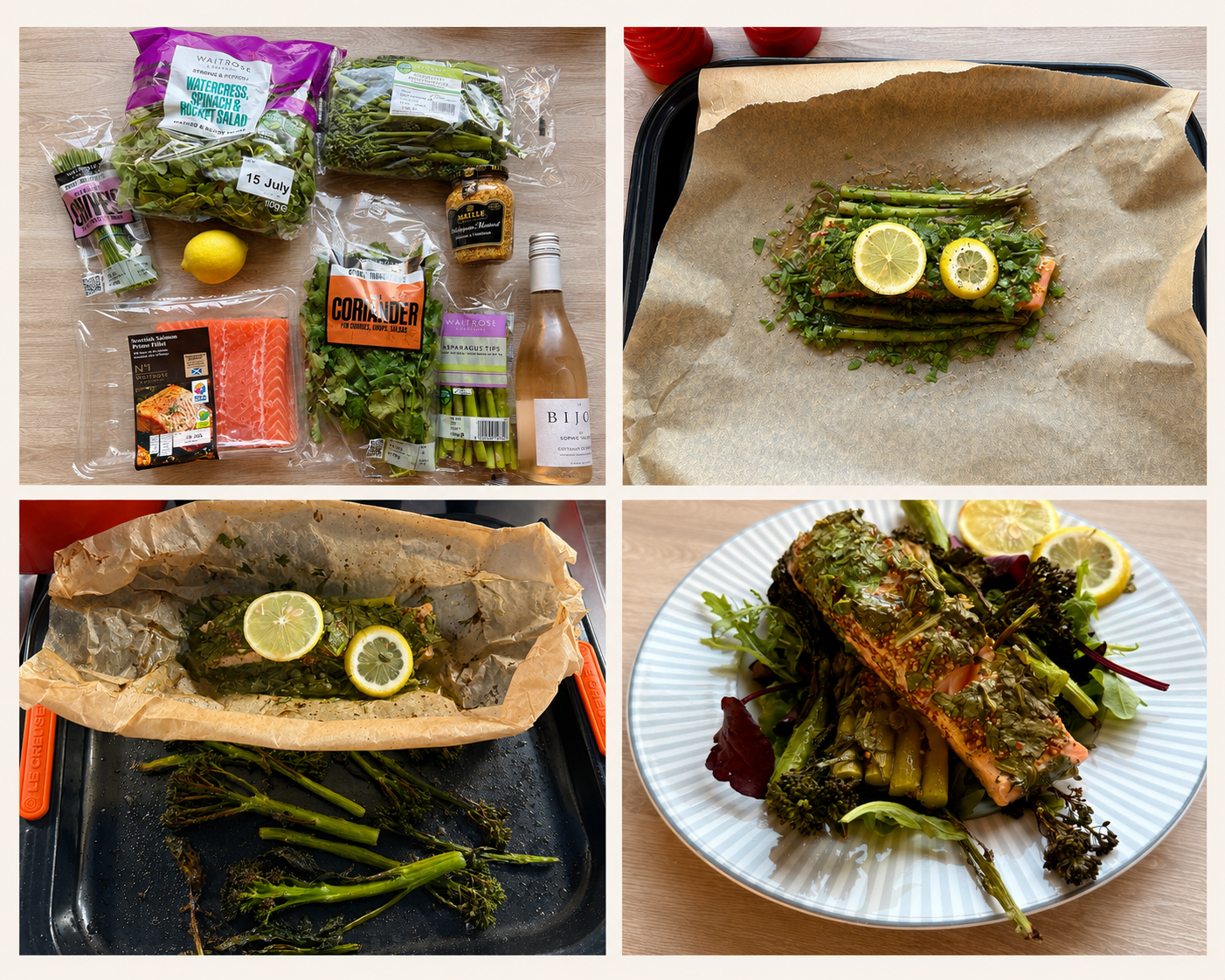
Serves 1
Ingredients
1 salmon fillet
1 tsp wholegrain mustard
1 lemon
1 tbsp Fresh coriander
1 tbsp Fresh chives
6–8 asparagus spears
6–8 Tenderstem broccoli stems
2 tbsp olive oil
A splash of rosé wine
A handful of rocket and spinach
Salt and freshly ground black pepper
Baking parchment
Method
Preheat the oven to 200°C fan.
Place a large sheet of baking parchment on a baking tray and put the salmon fillet in the centre.
Spread the wholegrain mustard over the salmon and season with salt and pepper. Add the fresh coriander and chives, then arrange the asparagus around the salmon.
Squeeze over the juice of half the lemon, add a few slices of the remaining lemon, drizzle with 1 tablespoon of olive oil and finish with a good splash of rosé wine.
Fold the baking parchment around the salmon and seal it into a parcel, keeping all those lovely juices inside.
Place the Tenderstem broccoli alongside the parcel on the baking tray. Drizzle with the remaining tablespoon of olive oil and season with salt and pepper.
Bake everything for around 15–20 minutes, until the salmon is cooked through and flakes easily and the Tenderstem is beginning to char at the edges.
Leave the salmon parcel to rest for around 5 minutes before carefully opening it.
Serve over a bed of rocket and spinach with the roasted Tenderstem and asparagus, spooning all of the lemony, herby rosé juices from the parcel over the top.
Around 30g of protein per serving.
Good Food for Good Hair
And salmon has another trick up its sleeve — it’s also an excellent source of omega-3 fatty acids.
Greek Yoghurt, Lemon Curd & Berries
Around 17–20g protein per serving
200g Greek yoghurt
1 tsp lemon curd
1 handful mixed berries
Simply spoon the yoghurt into a bowl, swirl through the lemon curd and scatter over the berries.
Breakfast, snack or dessert — three ingredients, two minutes and a surprisingly decent hit of protein.